

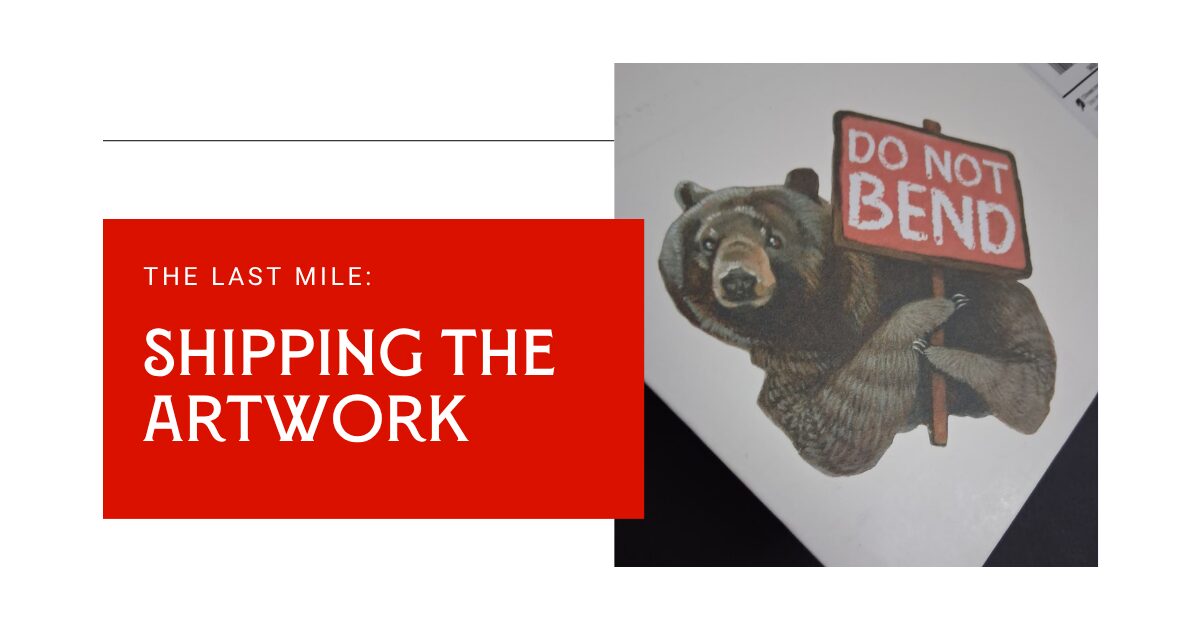
When I started Every Day Original in 2014, it was to avoid shipping my own work. I’m only half kidding. Now in our 12th year, we have shipped over 4,000 pieces of original art to new homes.
So, shipping happens. And the way we do it at EDO, you don’t have to wait for me to find the right alignment of stars to visit the post office. We’ve gathered some real stories in this post about how we do things here at Every Day Original, and the care and stories that go into the final act of getting the art home.
First thing you should know, we love the artist-collector connection that can happen in the process after a sale. That’s why at EDO artists ship directly to collectors. That last stretch from studio to front door belongs to the artist. The person who made the thing is also the one wrapping it, writing the note, and sending it off. Sometimes with a little extra in the package.
We asked three of our artists to walk us through the moment itself.
The Moment Itself
Hope Doe paints surrealist scenes in sumi and watercolor. They are layered, narrative works that live at the edge of a dream. When a piece sells, she emails the collector first. Thanks them and tells them when to expect another email once the work is in the mail. “I feel elated,” she says. “And somewhat relieved that someone was moved enough to want something I made in their home.”
Marian Pham, whose whimsical ink and gouache creatures have found homes across the world, says. “I take a moment to feel the gratitude.” Then adds, “It’s important to remember to keep your self-worth removed from the sale of a piece, so that you don’t spiral if something doesn’t sell immediately.”
Laura Garabedian, who paints strange and fantastic animals through intentional abstraction, puts it differently. “The moment is just a spark of joy. A moment of homecoming.”
What Goes in the Box?
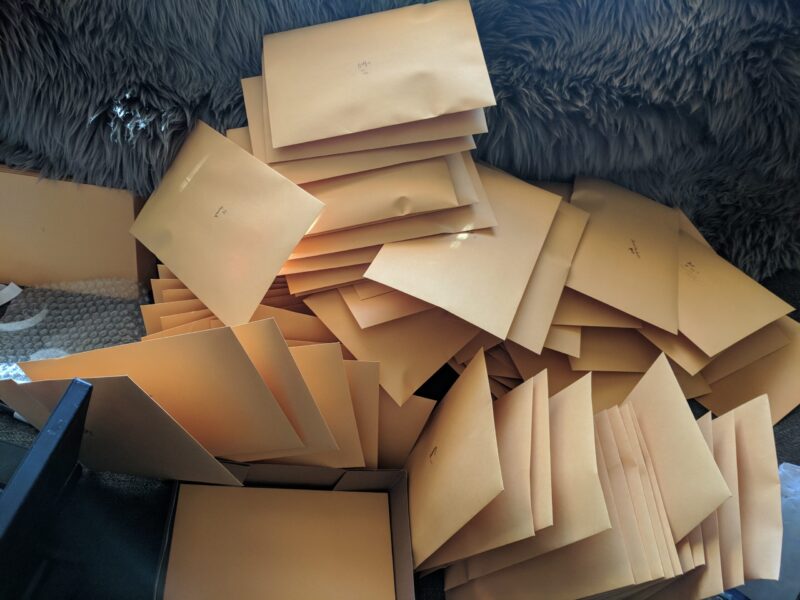
Because we don’t ship from a central location or person, we’ve traded consistency for delight. When each artist is putting together their package, their artistic personality shines through.
Hope keeps a closet dedicated to reusable boxes and packing material. Recycled, practical, “nothing fancy.” She needs the package to be well protected for what she calls “a long trip over some ocean.” The kind of thing you may also not think about is the artist’s studio and what challenges it may present. In Hope’s case, she checks for stray cat hairs before sealing the glass.
Marian calls her process 50/50: practical and ritual. The practical part is the protective sleeve, the freebies, the custom stickers. The ritual part is the personal handwritten note, written each time for each collector, and what she describes as extending gratitude into the object before it leaves. She also insures everything. “The extra few dollars,” she says, “is worth the peace of mind.”
Laura is a pragmatist who loves beautiful reused and reclaimed packaging. The padding too is a mix of new and recycled. She adds stickers, small prints as a thank you to each collector. “Every original sale does mean so much to me,” she says.
The Part That Nobody Talks About
Marian put it plainly: your box could get crushed or lost.
It doesn’t happen often, but it has happened. I could count on one hand how many times in over 4000 shipments. On the gallery end, we always make it right for the collector. And artists like Laura, Hope, and Marian take extra care and precautions.
Laura adds a test she uses every time: if you hear something when you shake the box, it isn’t packed right. Movement means potential impact, and it should feel solid with nothing loose.
Hope lives in Japan, and shipping times can be longer than our other artists. She spends that time in steady contact with both the collector and the post office. She says, what artists are really afraid of is simple. “A painting arriving in a collector’s hands damaged and beat up.”
Where it Lands
As an artist, I can tell you that when someone collects your work, there’s a piece of you that is now connected in a new way. This last stretch is when that connection is made.
When Marian hears back from collectors, they sometimes send her photos of pieces framed and hung. She saves them in a folder she calls “my art in the wild.” It’s a reminder, she says, that her work is out there, in rooms all over the world, on walls where people actually live.
Hope jokes that her more surrealist work might give children nightmares. But underneath her humor is something beautiful: “My work holds a part of me. And people who buy my work connected to that part of me enough to want it to be a part of their lives.”
This emotional aspect of the process is fairly universal. Laura says, “No matter the subject matter, people don’t buy originals unless it brings out some emotion in them. My art finding a permanent home means it has succeeded.” And we’d add, succeeded in bringing some of the joy from the artist’s process into the home of the collector.
The Heart of An Artist is Everywhere
That’s just it, every part of the process is connected to the artist, even shipping.
We love that our process allows the artist to bring so much care, joy, and even whimsy that every collector can feel it from the moment they buy the piece, to the years it spends in their home.
Hope Doe, Marian Pham, and Laura Garabedian all show and sell their original art through Every Day Original. You can find their work, and many others, at everydayoriginal.com.