
THE LONG WAY AROUND
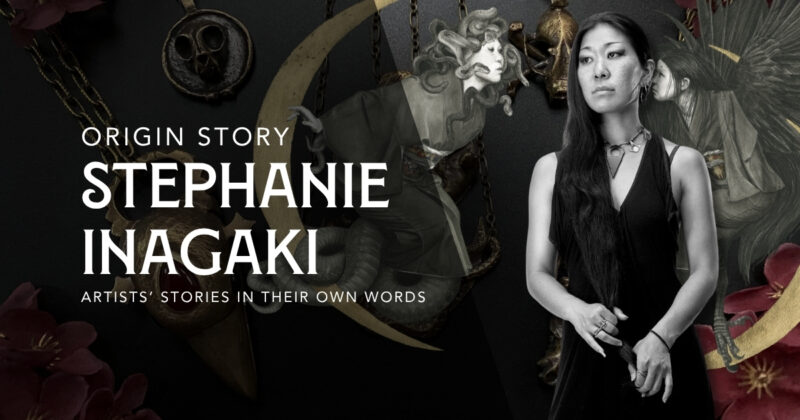
I met Stephanie Inagaki in LA through a mutual friend. If memory serves, it was at a loft that had a platform off of which you could dive into a one-person ball pit. I got to know her and her work and when I launched EDO in 2014 she was on the founding team of artists.
EDO is a gallery that celebrates the kind of whimsical, mythological, truth-telling that Stephanie seamlessly weaves into her work.
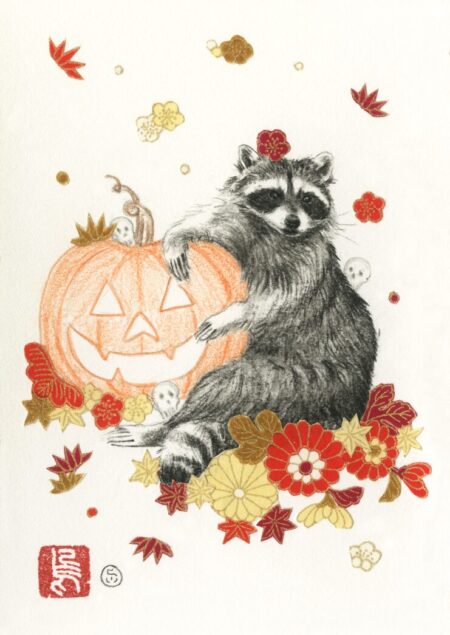
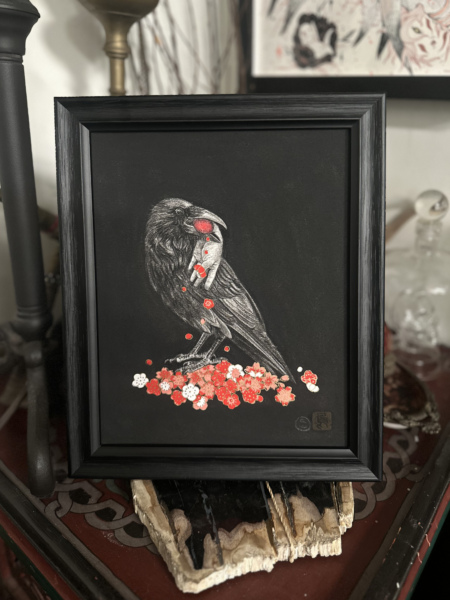
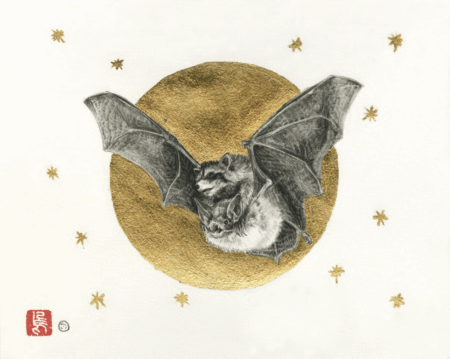
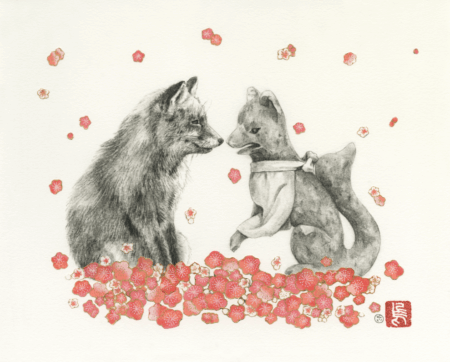
Until now, I only knew what I could see: paintings rooted in Japanese folklore. Exploring in images what is hard to put into words like life, death, love, and loss.
Her work has been with EDO for years, and collectors keep coming back to it.
We asked her where it all started.
What’s the version of your origin story you almost never tell?
My childhood best friend, Cortney and I both love animals and art. We were pretty creative, partially out of boredom so we made our own home movies, re-did tv shows and movies we liked. When we had to decide where to apply for colleges and what majors, I shied away from animal husbandry/zoology because I knew I couldn’t stomach putting animals down or seeing them hurt. So I went into art and she went with animals, and has been working at the LA Zoo for over a decade now.
That’s an incredible sliding doors moment.
How would you describe what you make now?
For ages, humans have used myths and folklore to express human stories and create space for the unknown through fantastical and surreal lenses. My body of work is inspired by the fairytales and folklore of my Japanese heritage. Additionally, with the use of anthropomorphic creatures like foxes, crows, snakes, and black cats, the personal narrative is a means to connect with the world at large. Through the use of these ethereal protagonists, I explore the cyclical nature of life and death, the masks we wear for ourselves and others, and the ways love and loss inspire our own transformations.
When was the first time you called yourself a professional artist?
It was after I graduated from graduate school and started working professionally as a career artist. That’s when I started exhibiting in Los Angeles and selling my drawings.
Was there a moment, a person, or a place that made you take your work seriously for the first time?
It was probably when I started art school since I was fully investing in myself and my career choice, while taking the financial risk for my education.
What was the benefit of your formal training?
I have my BFA from the College of Fine Arts at Boston University and my MFA from the San Francisco Art Institute. I’m happy with my formal training in that I can take the constructive (and not, yay internets!) criticism and not take it personally. Our foundation training spanned 2.5 years unlike most art schools that are only a semester or two. I was able to study abroad in Venice for a college semester as well. I haven’t been able to do that since college so I really appreciate the experience.
How do you feel about that path now?
I don’t think my MFA was necessarily needed in hindsight (on top of the insane amount of debt), but I’m happy with the lifelong friends and great experiences I had outside of school. I was able to apprentice with Deana Fukatsu of OctopusME Jewelry and learn how to silversmith. She encouraged me to make my own jewelry company which I am still doing to this day in addition to my fine art career. I also had a Creative Director job before I graduated at Rocket World and learned the ropes of how to work with someone else’s IP and ideas.
What did the people closest to you think when you started pursuing art?
What do they think now?
I’ve been creative since I can remember so no one was really surprised or fought against it. My mom was always the one concerned about money, and still is, but once I was selling more and making a full time living out of it, she finally back off from nagging too much. lol. Everyone else has always been supportive and enthusiastic!
If you could go back and tell your earlier self one thing about the road ahead, what would it be?
It’s ok to not listen to the adults who told you to not create so many different things.
Being able to make jewelry and accessories alongside paintings has also been a great way to earn a living. It also helps avoid feeling burnt out, because when I focus too much on one, I can go to the other and keep up the work. My majors were in sculpture, but I haven’t been able to sculpt in full scale. The jewelry carving keeps my sculpting going!
Stephanie Inagaki shows with Every Day Original. You can find her work at everydayoriginal.com/artists/stephanieinagaki